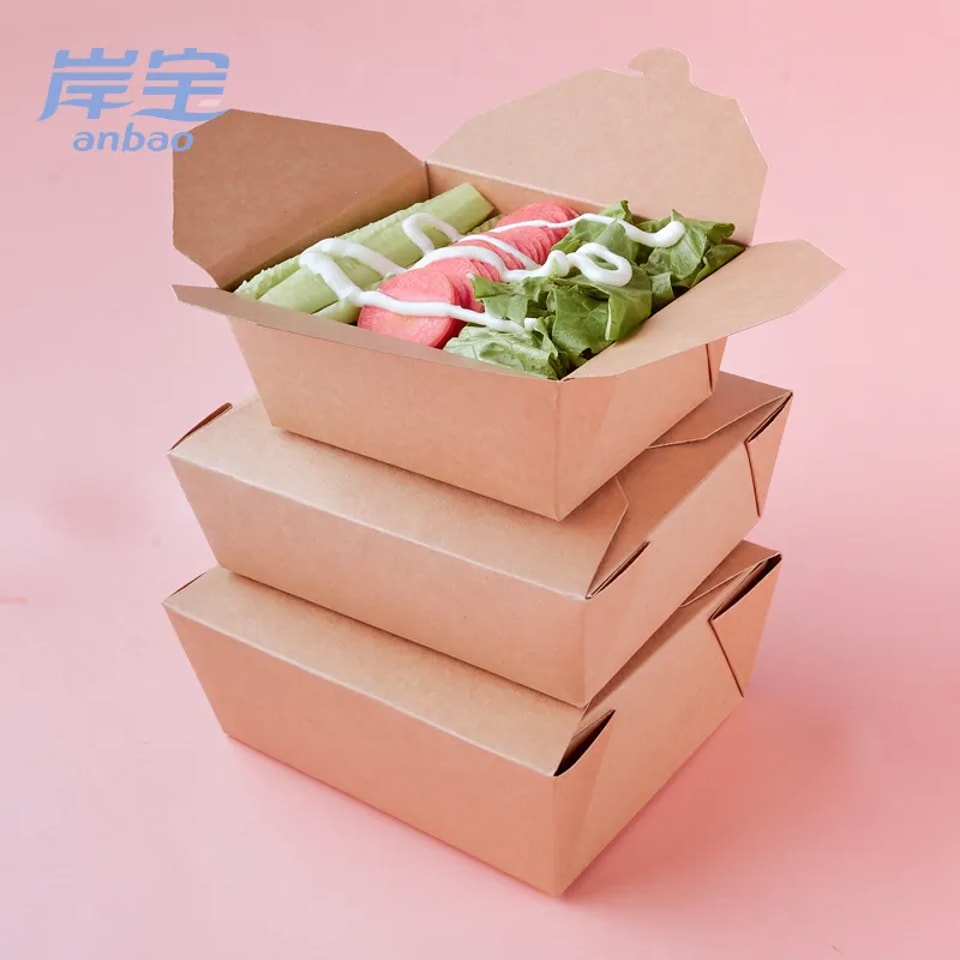
Custom printed paper salad bowls do more than hold food. For restaurants, salad bars, takeaway brands, and foodservice distributors, the right bowl needs to present fresh ingredients attractively while supporting daily packing, storage, and delivery operations.
A well-designed bowl should reflect the restaurant’s visual identity without compromising practical requirements such as capacity, structural strength, lid compatibility, and handling. The key is to consider branding and packaging performance together from the beginning.
Make Salad Packaging Part of Your Brand Identity
For takeaway and delivery businesses, packaging is often one of the few physical brand touchpoints customers take away with their meal. A custom printed salad bowl can help make that experience more consistent.
Keep the logo and design easy to recognize
A logo does not need to cover the entire bowl to make an impression. Clear placement and a balanced design can be more effective than using too many graphic elements.
When preparing artwork, consider:
-Logo placement: Make sure the logo remains visible when the bowl is held, stacked, or placed in a delivery bag.
-Brand colors: Use colors that match your existing packaging and visual identity.
-Pattern and messaging: Keep supporting graphics simple enough to avoid competing with the food.
-Print area: Consider the bowl’s shape and curved surface when arranging text and images.
The final design should work on the actual bowl, not just on a flat artwork preview. Reviewing a printed sample helps you assess how the logo, colors, and layout appear on the finished packaging.
Match the design to your serving style
A salad bowl used for dine-in service may have different presentation priorities from one used mainly for delivery. Restaurants with several service channels should consider whether the same design can work across takeaway, delivery, catering, and in-store orders.
Consistent colors, logos, and packaging styles can help connect different menu items under one brand identity. At Anbao, we support customized food packaging solutions, including logo, pattern, color, and size customization.
Choose a Bowl Structure That Fits Your Menu
An attractive printed design is only part of the decision. The bowl also needs to suit the ingredients, portion size, and way the salad is served.
Select the right capacity and shape
A bowl that is too small may compress leafy greens and toppings, while an oversized bowl can make a regular portion look less appealing and take up unnecessary storage space.
Before choosing a specification, consider:
-The standard serving weight and volume
-Whether the salad includes leafy greens, grains, fruit, or protein
-The amount of space needed for toppings
-Whether customers mix the ingredients before eating
-How the bowl will be stored and carried
Round bowls are a practical option for mixed salads and grain bowls because their open shape makes ingredients easy to arrange and access. Rectangular or square containers may be worth considering when the menu includes separated components or a more structured presentation.
The best format depends on the actual menu rather than appearance alone. Our
paper bowl and food container range includes different shapes and formats for foodservice applications.
Check rigidity and stacking performance
Restaurants often prepare multiple orders at the same time. Bowls may be stacked during storage, filled on a busy packing line, and placed together in delivery bags.
A high-stiffness structure can help a paper bowl maintain its shape during handling and stacking. When evaluating samples, check whether the rim and sides remain stable after filling and whether the bowl is easy for staff to hold and pack.
Stacking should also be considered before ordering in bulk. Confirm that empty bowls can be stored efficiently and that filled bowls can be arranged without putting excessive pressure on the food or container.If you are comparing kraft paper options for salad packaging, read our guide to
disposable thickened kraft paper salad bowls to learn more about this packaging option.
Test Moisture, Dressing, and Lid Compatibility
Salads may appear less demanding than hot or liquid-based meals, but their ingredients can still create packaging challenges. Washed vegetables may retain water, fruit can release juice, and dressings may contain oil or other liquids.
Test with your actual salad ingredients
Do not select a bowl based only on a general description such as leak-resistant or suitable for takeaway. The performance of a finished package depends on its material, coating, structure, food contents, and holding conditions.
A practical sample test should include:
Fill the bowl with a typical restaurant portion.
Add the ingredients and dressing in the same way as normal service.
Close the bowl with the intended lid, if applicable.
Leave it for a realistic preparation and delivery waiting period.
Check for moisture exposure, deformation, leakage, and changes to the presentation.
If dressing is packed separately, test the main bowl and sauce container as a complete packaging set. If dressing is mixed into the salad before packing, make sure the sample test reflects that condition.
Approve the bowl and lid as one package
A suitable bowl can still create problems if the lid does not fit securely. Check the lid’s compatibility with the exact bowl dimensions and confirm that it can be closed consistently by kitchen staff.
During testing, pay attention to rim fit, closure stability, ease of opening, and whether the lid remains in place when the package is tilted or carried. Avoid changing the bowl or lid specification after approval without repeating the relevant tests.
Plan Custom Printing Before Bulk Production
Once the bowl format and functional requirements are clear, the next step is to finalize the printed design and production details.
Prepare your logo and artwork files in advance, and communicate the required colors, print coverage, dimensions, and order quantity. If you have several bowl sizes, confirm whether the same artwork can be adapted across all formats without affecting logo visibility or layout balance.
A pre-production sample is useful for checking the finished appearance before a larger order is confirmed. Review the printed colors, logo position, overall design, bowl dimensions, and lid fit together. Any adjustments should be agreed upon before mass production begins.
At Anbao, we provide customized paper food packaging for foodservice businesses and distributors. Our production approach supports personalized requirements at scale, helping buyers coordinate product specifications and branding details for their packaging projects.
Find the Right Custom Printed Salad Bowl for Your Restaurant
The right custom printed paper salad bowl should do two jobs well: present your food in a way that reflects your brand and perform reliably throughout preparation, packing, and delivery.
Start with your menu, portion sizes, and service conditions. Then evaluate bowl shape, capacity, rigidity, moisture performance, and lid compatibility using actual food samples. Once the functional specification is confirmed, finalize the logo, colors, and artwork for production.
If you are planning a custom salad bowl project,
contact Anbao with your preferred bowl format, capacity, artwork, estimated order quantity, and target market. Our team can help discuss suitable packaging options for your requirements.