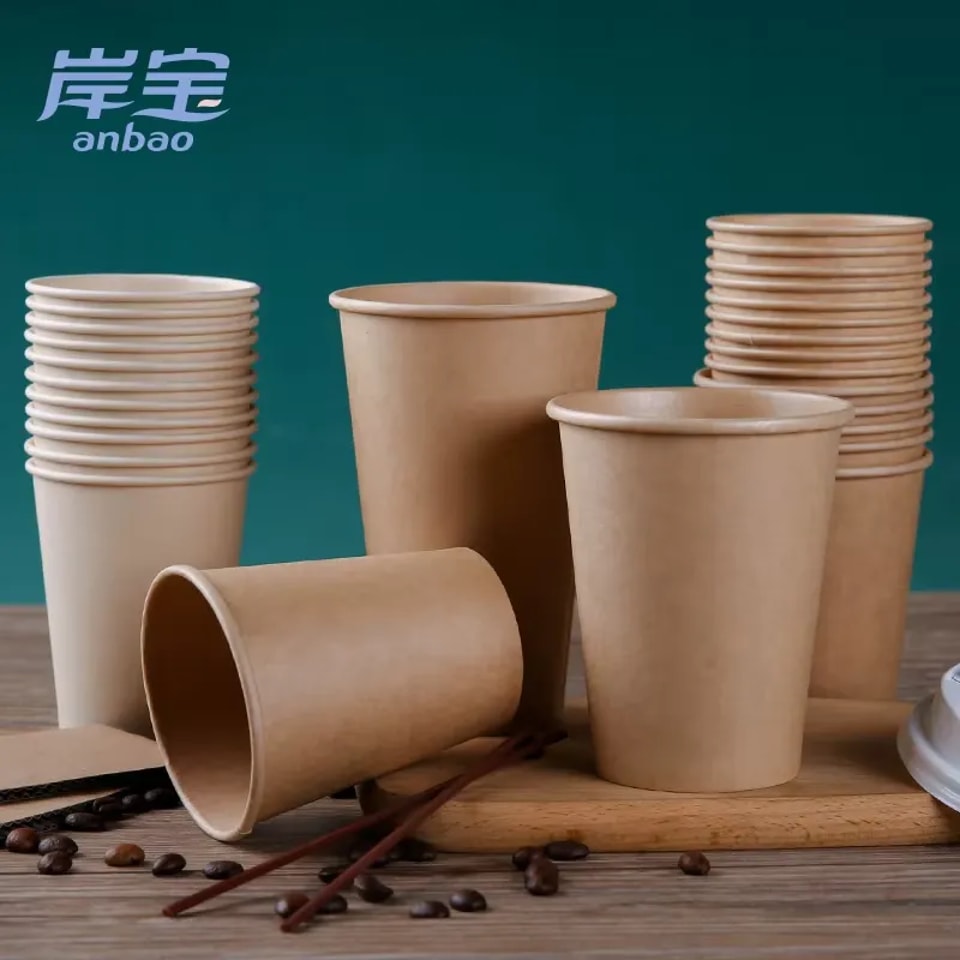
Is a 16oz single wall kraft paper coffee cup the right size for your takeaway coffee, milk tea, or iced drink menu? How much beverage can it hold, and will its dimensions fit your lids, serving equipment, and daily operations? Choosing a cup involves more than matching the capacity printed on the label. Its opening, height, base diameter, and wall structure all influence how it works in a real beverage business.
What Are the Dimensions of a 16oz Kraft Paper Cup?
A 16oz cup is a common option for businesses that serve larger takeaway portions. However, two cups with the same stated capacity may have different shapes and dimensions. Checking the actual measurements helps avoid problems with lid selection, storage, and drink preparation.
Our product specification provides the following details for this 16oz paper cup:
| Specification | Details |
| Listed capacity | 16oz / 497ml |
| Top diameter | 90mm |
| Bottom diameter | 59.6mm |
| Height | 135mm |
| Cup structure | Single wall |
| Material | Kraft paper |
How Do These Measurements Affect Daily Use?
Each dimension has a practical role:
-Top diameter – 90mm: The opening determines which lid can fit the cup. A lid designed for a different rim size may not attach securely, even if it is also described as suitable for a 16oz cup.
-Bottom diameter – 59.6mm: The base affects how the cup sits on counters, trays, and cup holders. It is also useful when checking storage and dispensing equipment.
-Height – 135mm: Cup height influences how much space the cup occupies during storage and how it fits into a takeaway carrier or serving setup.
These measurements should be considered together. Capacity alone does not tell you whether a cup will fit your existing lids or equipment.
Our
16oz single-wall kraft paper cups can be considered when planning a consistent takeaway cup specification. Before placing an order, compare the listed dimensions with the packaging and accessories used in your operation.
Which Popular Coffee and Tea Brands Offer 16oz Drinks?
The 16oz serving size appears in both coffee and tea menus. Looking at familiar beverage brands can help businesses understand how this capacity is positioned in the market. These examples refer to drink serving sizes, not the exact paper cup dimensions or construction used by each brand.
Starbucks Grande Coffee
In the US, Starbucks uses Grande as its 16 fl oz size. Drinks such as Caffè Latte and Caffè Americano are available in this serving size.
For coffee shops, this provides a useful reference when planning a larger standard takeaway portion. A 16oz cup can accommodate a full coffee serving while leaving room to consider milk, foam, or other additions, depending on the recipe. Businesses developing their own menus can use this size as a reference point, then adjust the actual fill level to match their drinks.
Chatime Milk Tea and Tea Drinks
Some Chatime US store menus also offer 16oz drinks, including hot Thai Milk Tea and Taro Milk Tea. This shows that the size is not limited to traditional coffee menus. It can also be considered for milk tea and other specialty tea beverages.
For tea shops, the final serving volume may be affected by ingredients such as milk, tea, syrup, tapioca pearls, and other toppings. The cup should therefore be selected according to the finished drink rather than the liquid volume alone.
What Can Beverage Businesses Take from These Examples?
The same 16oz capacity can serve different menu purposes:
-Coffee shops may use it for larger hot or iced coffee portions.
-Milk tea shops may use it for selected milk tea and specialty tea drinks.
-Beverage chains may include it as one size within a broader menu range.
The important point is to match the cup to the recipe and serving method. A 16oz label is a useful starting point, but it does not replace testing the actual drink volume and presentation.
What Drinks Can You Serve in a 16oz Cup?
A 16oz cup offers room for a relatively generous beverage portion. It can be considered for different takeaway drinks, provided that the cup material, coating, and lid are suitable for the intended application.
-Coffee: Americano, latte, flavored coffee, and other larger coffee servings. For milk-based drinks, consider the space needed for milk and foam when setting the fill level.
-Milk tea: Classic milk tea, taro milk tea, and other milk-based tea drinks. If the recipe includes tapioca pearls or other toppings, allow enough space for both the ingredients and the liquid.
-Iced beverages: Iced coffee, iced tea, and fruit tea. Ice takes up part of the cup's internal volume, so the amount of liquid served may be lower than for a drink without ice.
A cup's listed capacity should not automatically be treated as its recommended fill volume. Businesses should test their recipes in the actual cup, especially when introducing a new size to an existing menu. This helps maintain consistent portions and reduces the risk of overfilling during busy service periods.
Is a Single Wall Cup Suitable for Hot Drinks?
A single-wall cup has one main paper wall. Its straightforward structure makes it an option for takeaway beverage service, but the choice should account for the temperature of the drink and how customers will hold the cup.
For hot coffee and tea, the drinking temperature, holding time, and customer experience all matter. Some businesses may find that a separate cup sleeve is useful, particularly when customers need to carry a hot drink for an extended period.
A double-wall cup offers a different structure, with an additional outer paper layer. This creates another option for businesses that want to consider the cup's insulation and handling experience. Our
double-wall paper cups provide a reference for comparing the two structures.
Neither structure is automatically the right choice for every menu. A coffee shop serving mostly hot drinks may have different requirements from a business focused on iced beverages. Consider the drink temperature, serving duration, customer handling, and overall packaging cost before selecting a cup type.
How to Specify a 16oz Cup for Your Drink Menu
Instead of choosing a cup based on capacity alone, start with the drinks you plan to serve. A few product details can make a difference to the final result.
1. Set the serving volume
Decide how much finished beverage each menu item should contain. Account for milk, foam, ice, pearls, and other toppings. Test the recipe in the cup to confirm that there is enough space without leaving an unnecessarily large gap at the top.
2. Check the lid and rim together
The 90mm top diameter is an important reference when selecting a lid. However, nominal diameter alone does not guarantee compatibility. Test the actual cup and lid combination to check the fit, closure, and stability during takeaway transport.
3. Select a suitable coating
Our paper cup range offers PE, PLA, and water-based coating options. The right choice depends on the beverage application, packaging requirements, and target-market standards. These options should be evaluated for the specific cup specification rather than assumed to be interchangeable.
4. Plan the printed design
For branded beverage businesses, the cup is also part of the customer-facing presentation. Consider how the logo, background color, and graphic elements will appear on the kraft paper surface. Artwork should be checked against the cup template, and a pre-production color sample can help confirm the intended appearance before mass production.
A suitable 16oz cup should work with the beverage recipe, lid, and serving routine as one complete packaging choice. By checking capacity and physical dimensions together, coffee shops and tea businesses can choose a cup specification that fits their actual menu instead of relying on the size label alone.