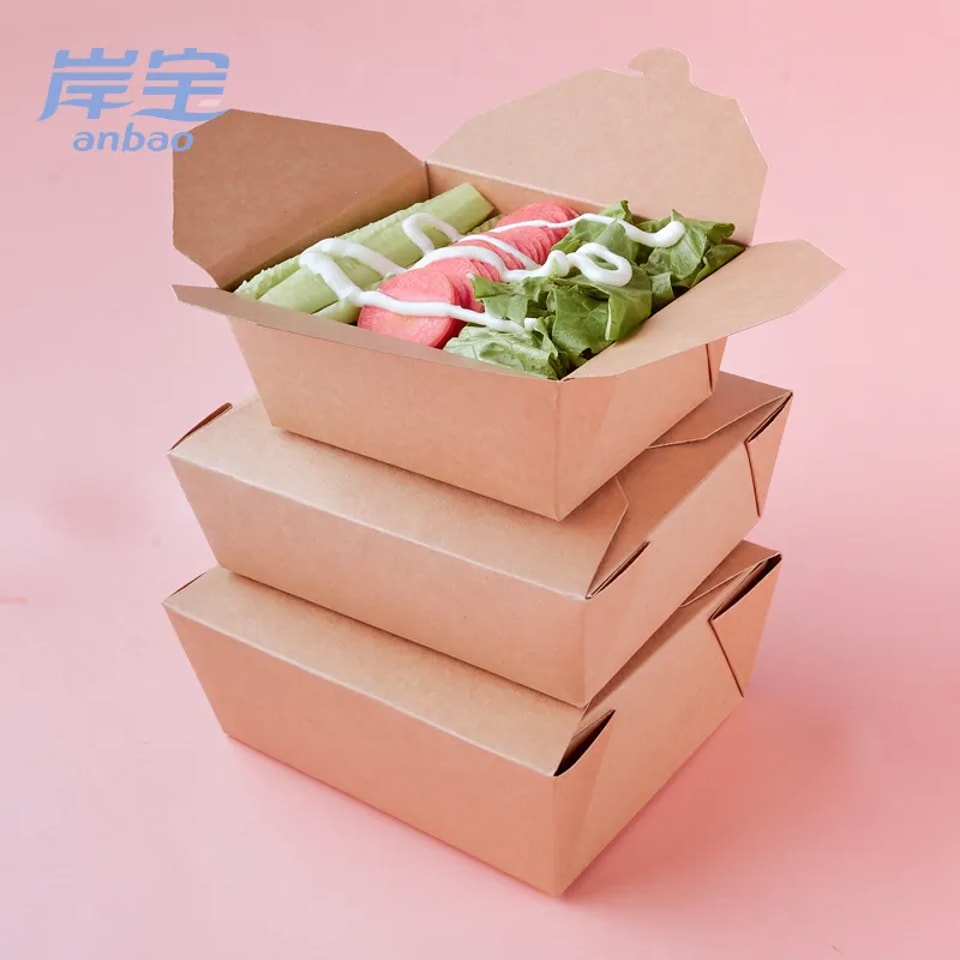
Takeaway food containers help protect food quality, prevent leaks, maintain presentation, and simplify delivery. Restaurants, food delivery businesses, and distributors should choose packaging according to food type, temperature, moisture, grease, portion size, and transportation conditions.
Why Food Type Matters When Choosing Takeaway Containers
Different foods require different packaging features. Hot meals need suitable heat resistance and structural strength, soups require leak protection, and fried foods need grease resistance. Testing containers under realistic conditions helps prevent packaging failures.
Takeaway Containers for Hot Meals, Rice, and Noodles
Paper Containers for Rice Meals
Rice meals and combination dishes need containers that support food weight and maintain their shape during stacking and transport. Compartments can keep rice, vegetables, proteins, and sauces separate.
At Anbao, our
paper bowl and container series offers different shapes and formats for takeaway meals, helping businesses match packaging to portion sizes and serving needs.
Containers for Noodles and Saucy Foods
Noodles and saucy dishes require suitable moisture resistance and secure closures. Broth-based meals need stronger leak protection, while stir-fried noodles may require grease resistance and sufficient space.
Test the assembled container and lid with the intended food under expected holding and transport conditions.
Heat Resistance and Structural Strength
Paper packaging is not automatically suitable for every temperature or heating method. Confirm whether the specific container supports hot filling, prolonged food contact, or reheating, as these requirements differ.
Takeaway Containers for Soups, Curries, and Oily Foods
Leak Resistance for Soups
Soup and curry containers need suitable barrier performance, reliable seams, and secure lids. Check capacity, temperature suitability, lid fit, and leakage using the complete package.
Our
soup containers are an option to evaluate for liquid-based food applications. Confirm product specifications against your menu requirements.
Grease Resistance for Fried and Oily Foods
Oil-rich dishes can stain or weaken unsuitable packaging. Material selection should reflect oil content, temperature, and contact time. Test containers with representative menu items before bulk production.
Paper Coatings and Food Safety
Coatings help paper packaging resist moisture and grease, but no single option suits every application. Confirm food-contact suitability, temperature limits, and relevant documentation. Environmental performance should also be verified for the finished product.
Takeaway Containers for Burgers, Fries, and Fried Chicken
Burger Containers for Shape and Presentation
Burger containers should accommodate buns, fillings, and sauces without excessive compression. Ventilation may help manage trapped steam, while the folding structure should remain stable during delivery.
For branded packaging, approve artwork, colors, dimensions, and container design before production.
Packaging for Fries and Fried Chicken
Fried foods can lose crispness when moisture accumulates inside the package. Ventilation, grease resistance, structural strength, and delivery time all affect performance. Test typical portions under realistic delivery conditions.
Takeaway Containers for Salads and Ready-to-Eat Meals
Salad Containers for Freshness
Salad containers need enough space to protect fresh ingredients and maintain presentation. Consider container dimensions, opening size, lid compatibility, and whether dressing will be packed separately.
Containers for Rice Bowls and Combination Meals
Bento meals and grain bowls often combine several ingredients. Compartments help separate food and maintain portion consistency. Standardizing container sizes can also simplify inventory management.
For ready-to-eat meals, clarify filling temperature, storage conditions, shelf-life requirements, and reheating instructions before selecting packaging.
Sustainable Materials for Takeaway Food Containers
Paper-Based, PLA-Coated, and Water-Based Options
Paper containers come in different shapes, sizes, and coating configurations. PLA and water-based coatings have different compositions and performance characteristics, so suitability depends on the food application and product design.
A paper-based appearance or specific coating does not automatically prove that a container is recyclable, biodegradable, or compostable.
How to Verify Environmental Claims
Ask suppliers for documents identifying the specific product, applicable standard, and disposal requirements. Food-contact compliance, responsible fiber sourcing, recyclability, and compostability are separate considerations and should be checked independently.
Choosing Takeaway Containers for Different Businesses
Restaurants and Quick-Service Chains
Restaurants need packaging for different menu categories, while chains also require consistent specifications and reliable replenishment. Standardizing sizes, artwork, and quality requirements can reduce variation across locations.
Delivery-Only Kitchens
Delivery packaging must withstand packing, stacking, vehicle movement, and the time between dispatch and consumption. Test leakage, deformation, closure security, and food presentation after transport.
Distributors and Bulk Buyers
Consider minimum order quantities, storage capacity, lead times, printing requirements, and quality consistency—not just unit price. Approved specifications and samples help support reliable repeat orders.
What to Check Before Ordering Takeaway Food Containers
Before purchasing, confirm:
-Food type, portion size, temperature, moisture, and grease requirements.
-Container dimensions, structure, capacity, and lid fit.
-Leakage, rigidity, printing, and other relevant quality checks.
-Food-contact documentation and environmental certifications.
-MOQ, sample approval, production lead time, and shipping arrangements.
-Procedures for approving changes and handling defects.
At Anbao, our quality-control approach includes checks for leakage, rigidity, printing, adhesion, and odor. Buyers should confirm that product documentation applies to the specific container and target market. For customized packaging or wholesale inquiries,
contact our team.
Conclusion: Choose Takeaway Food Containers by Application
The right takeaway food containers depend on the food and its journey from preparation to consumption. Hot meals need suitable structural strength, soups require leak protection, fried foods need grease resistance, and salads benefit from designs that protect presentation.
At Anbao, we develop paper food packaging solutions in different formats, sizes, and customized designs. Evaluate materials, product performance, compliance, and supply requirements together to build a packaging range that supports reliable daily operations.