Why Salad Bowls Leak in Delivery—and How Disposable Thickened Kraft Paper Salad Bowls Help
2026-08-20
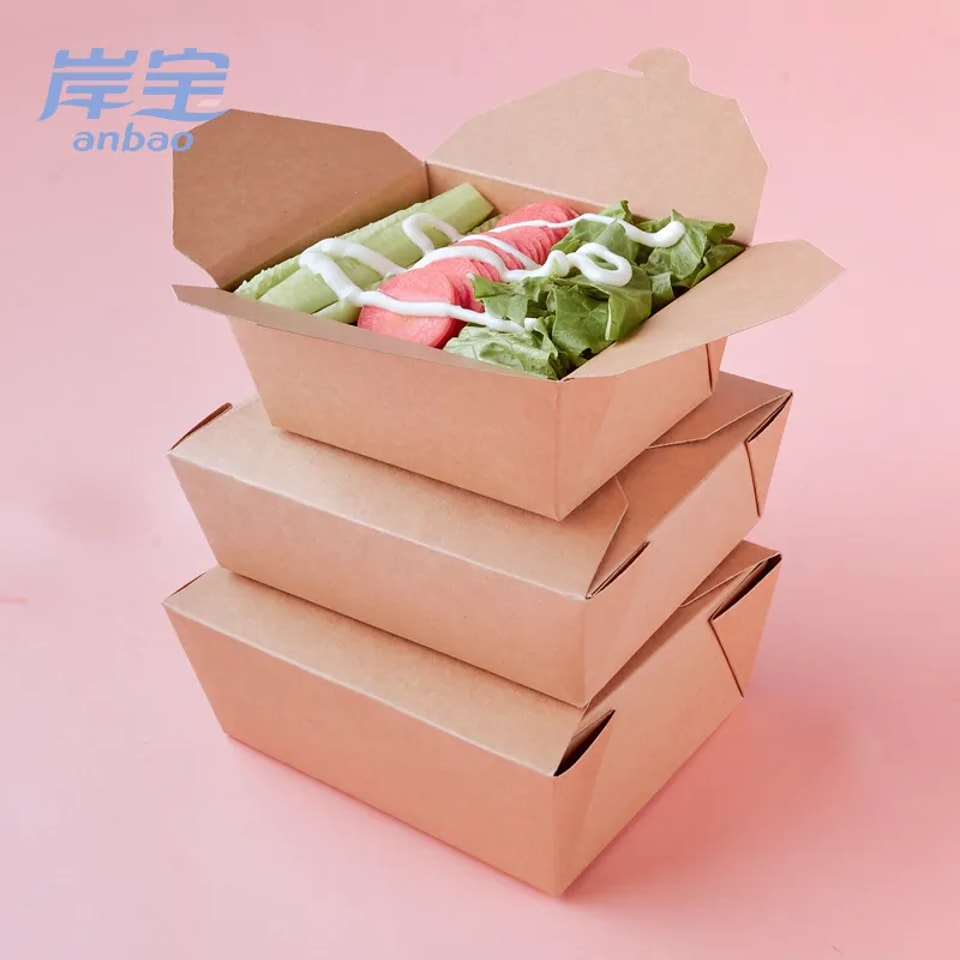
Salad leakage in delivery is rarely caused by one issue alone. Residual moisture, dressing, lid fit, filling height, stacking pressure, and transport movement can all affect the final customer experience.
For B2B buyers, selecting disposable thickened kraft paper salad bowls should involve more than comparing unit prices. The bowl, lid, food type, packing process, and delivery conditions should be assessed together.
Why Salad Bowls Leak During Delivery
Mixed ingredients create moisture pressure
Salads may combine washed greens, fruit, grains, protein, sauces, and warm or chilled ingredients. Water from produce, juice from fruit, oil from dressings, and condensation can create a demanding internal environment for a paper food container.
A dry grain bowl and a dressed fruit salad may require different packaging tests. The latter may need greater attention to holding time, sauce placement, bowl stability, and closure performance.
Leakage often begins at the rim
Not every leak starts with the bowl wall. A lid may sit unevenly, a bowl may be overfilled, or pressure from a delivery bag may loosen the closure around the rim.
For this reason, the bowl and lid should be sourced and tested as one system. A purchasing specification should identify the approved bowl model, lid, maximum fill level, and menu application.
Deformation can affect lid security
When a filled bowl is stacked or compressed, the rim may change shape. Even small deformation can reduce lid engagement and create an opening for dressing or liquid to escape.
Tests should include filling, closing, waiting, tilting, carrying, bagging, and short-term stacking. Static water tests alone do not reflect normal takeaway handling.
Choosing Disposable Thickened Kraft Paper Salad Bowls
Assess the complete structure
“Thickened” is not a complete purchasing specification. Buyers should assess the bowl wall, base stability, rim construction, dimensional consistency, lid fit, and performance with the intended food.
The suitable disposable thickened kraft paper salad bowls depend on the full application, including the recipe, portion size, filling process, closure system, and expected delivery route.
Review food-contact documentation
Foodservice purchasers should confirm food-contact documentation and destination-market requirements before placing an order. Material information, product traceability, and agreed quality criteria should be reviewed as part of supplier onboarding.
Anbao states that it focuses on food packaging and customised solutions. Its company history also notes participation in the formulation of China’s national standard General Technical Requirements for Food Contact Materials and Containers.
Match capacity to the menu
Nominal capacity does not always equal usable fill volume. Toppings, sauce cups, headspace, and lid clearance all affect how much food can be packed safely.
Anbao lists round paper bowl capacities including 350 ml, 450 ml, 550 ml, 650 ml, 750 ml, 998 ml, 1100 ml, and 1300 ml. These formats can be sampled for side salads, fruit portions, individual meal bowls, and larger sharing servings.
A Practical Testing Protocol
Use actual food and holding times
Test packaging with the same ingredients and portion weights used in daily operations. Include the usual preparation sequence, especially whether dressing is mixed in, placed on top, or served separately.
Set holding times that reflect real service: preparation, dispatch waiting, and delivery. Check for moisture exposure, lid movement, bowl deformation, leakage, and contamination of the outer bag.
Simulate delivery handling
A useful trial includes controlled tilting, carrying, bag placement, stacking, and light compression. The objective is to observe how the packaging behaves in conditions similar to the delivery journey.
Each brand should set test conditions around its own order model. Nearby office delivery and a multi-item motorcycle delivery may create different packaging demands.
Define acceptance criteria first
Before scaling an order, agree on the tested bowl-and-lid combination, fill level, test food, holding time, visual requirements, and inspection process.
This gives the purchasing team, kitchen staff, and supplier a shared reference. It also reduces ambiguity if changes are required after sampling.
Selecting Bowl Shapes and Sizes
Round bowls for flexible portions
Round paper bowls are often used for salads, grain bowls, fruit, soups, noodles, and light meals. They can help a menu use fewer packaging formats while accommodating different serving sizes.
Anbao’s round paper bowl range includes multiple capacities and published dimensions. Buyers can use this information to assess serving fit, storage, lid selection, and placement in delivery bags.
Square and rectangular options
Square and rectangular paper bowls and food containers may suit meals that need component separation or specific presentation. They can also be considered for bento, rice dishes, snacks, fruit salads, and takeaway meal sets.
Anbao’s paper bowl and container range includes round, square, and rectangular formats, along with thickened kraft paper food containers for fast food, bento, fruit salad, and takeaway packaging.
Approve lids with the bowls
A lid should never be selected after the bowl has been approved. Any change in lid type, bowl dimensions, or source can affect closure performance.
Test the exact final combination with the intended recipe. If the menu requires a lower fill line or separate sauce packaging, include these steps in operational instructions.
Supplier Capability and Consistency
Consistency matters after sampling
A successful sample does not guarantee repeat-order consistency. Restaurant groups, distributors, and private-label brands should review batch control, lead times, inspection procedures, packaging configuration, and change-management processes.
The goal is to maintain the agreed product specification across repeat production runs. This is especially relevant for multi-location foodservice brands.
Manufacturing systems and project control
Anbao describes a shift toward lean digital manufacturing and states that it partnered with Siemens to establish a digital factory. Its published history also mentions automated production for Master Kong paper bowls and a Just-In-Time system used in Southwest China.
For buyers, the relevant questions are practical: How is the approved specification recorded? How are production changes controlled? Which inspection records are available for each order? These topics are more useful than general statements about manufacturing technology.
Relevant project experience informs sourcing questions
When evaluating a paper food packaging supplier, B2B buyers often review publicly available project information to understand the scale, product categories, and operating requirements involved in previous collaborations. This can help procurement teams prepare more focused questions about production planning, quality controls, delivery scheduling, and audit procedures.
From 2004 to 2021, Anbao designed and supplied paper bowls for Master Kong under a supply programme serving Southwest China, including Chengdu, Chongqing, and Kunming. The published project information records daily supply of up to 3 million paper bowls and a reported customer-use defect rate of 0.1 PPM during the cooperation period.
The same project information describes a separate paper-cup programme for DE, involving 7.5 oz paper cups and monthly supply of 20 million units. It also notes annual global supply-chain audits and a reported 100% on-time delivery record. These figures relate specifically to the disclosed paper-cup project rather than to salad bowls; for salad-bowl buyers, they provide context for discussing capacity planning, order fulfilment, audit requirements, and quality expectations with a prospective supplier.
Instead of treating prior project information as a substitute for product validation, procurement teams can use it to structure their due-diligence process. Relevant questions include whether the proposed bowl specification can be produced consistently, how quality checks are documented, which delivery arrangements apply to the destination market, and how specification changes are managed across repeat orders.
Building a Verified Packaging Programme
Anbao supplies paper cups, paper bowls, food containers, ice cream cups, popcorn tubs, and compostable packaging solutions. Its product information also states support for custom logos, patterns, colours, sizes, and private-label packaging.
For salad and takeaway brands, an integrated packaging review can cover the main bowl, sauce container, beverage cup, side container, carrier bag, and visual branding. Explore paper bowls and food containers after confirming the food use case and test requirements.
Customisation should follow functional approval. Confirm the bowl size, lid, food application, fill level, delivery conditions, and quality requirements before finalising logo placement, colour, pattern, carton configuration, and replenishment arrangements.
Buyers may also review Anbao packaging projects to identify publicly disclosed collaboration information involving Master Kong, Coca-Cola, DE, and BP. These references can inform discussions about project planning, audits, quality documentation, and production capacity.
Procurement Checklist
- Define food type, moisture level, dressing format, portion weight, temperature, and delivery duration.
- Select and test the bowl and lid as one system.
- Establish maximum fill levels and kitchen packing instructions.
- Test actual menu items at realistic holding times.
- Include tilt, carrying, stacking, and bagging in sample trials.
- Confirm food-contact documentation for the destination market.
- Record sample findings, batch information, and acceptance criteria.
- Review supplier production controls, lead time, inspection, and delivery arrangements.
- Finalise branding artwork after functional validation.
Salad delivery leakage is a packaging-system issue, not simply a bowl-material issue. The right disposable thickened kraft paper salad bowls should be matched to the menu, lid, filling method, and delivery environment through documented testing.
For salad, light-meal, and takeaway programmes, custom paper food packaging should begin with a clear specification covering food use, container format, closure system, delivery route, and quality expectations.
Solutions & Support
We go the extra mile to analyze your specific project in detail and offer a tailored business solution that meets your requirements.
Contact US
×Support order samples, customization, wholesale direct, and complete payment. If the product you look for does not have corresponding customized content, pls fill out the form below to contact us, and we will reply ASAP.
Go to Contact Form →