Custom Disposable Double Wall Coffee Cups_ A Complete B2B Buyer’s Guide
2026-08-26
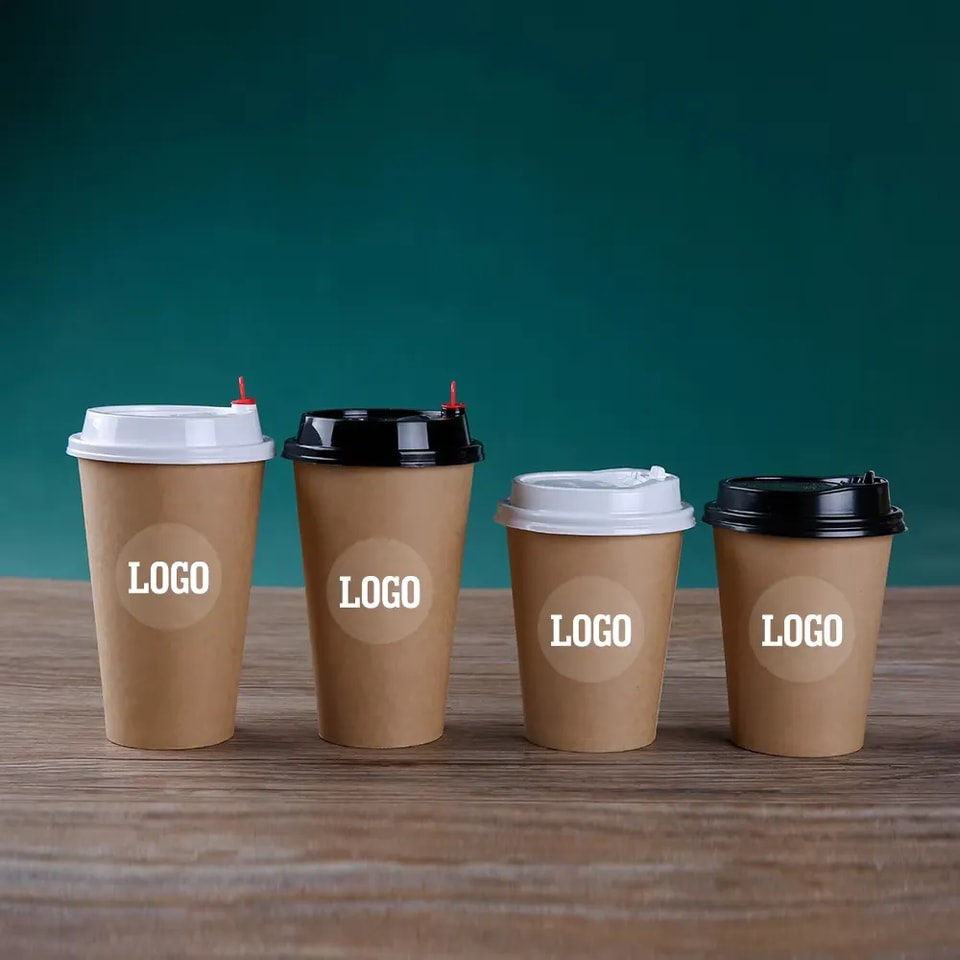
For café chains, restaurant groups, beverage brands and international foodservice distributors, custom disposable double wall coffee cups go far beyond standard takeaway supplies. They serve as vital brand touchpoints, balancing heat insulation, user safety, takeaway functionality, food-contact compliance and consistent brand aesthetics. For B2B procurement teams, smart purchasing decisions depend on precise technical specifications and structured supplier audits—not product photos or the lowest upfront quotes.
Every custom disposable double wall coffee cup must align with your beverage type, lid compatibility, serving temperature, end-user scenarios, brand artwork guidelines and in-store or delivery operations. This guide outlines the critical sourcing considerations for premium double wall cups, delivering B2B-focused insights for buyers working with professional manufacturers such as Anbao.
What Makes a Double Wall Coffee Cup Different?
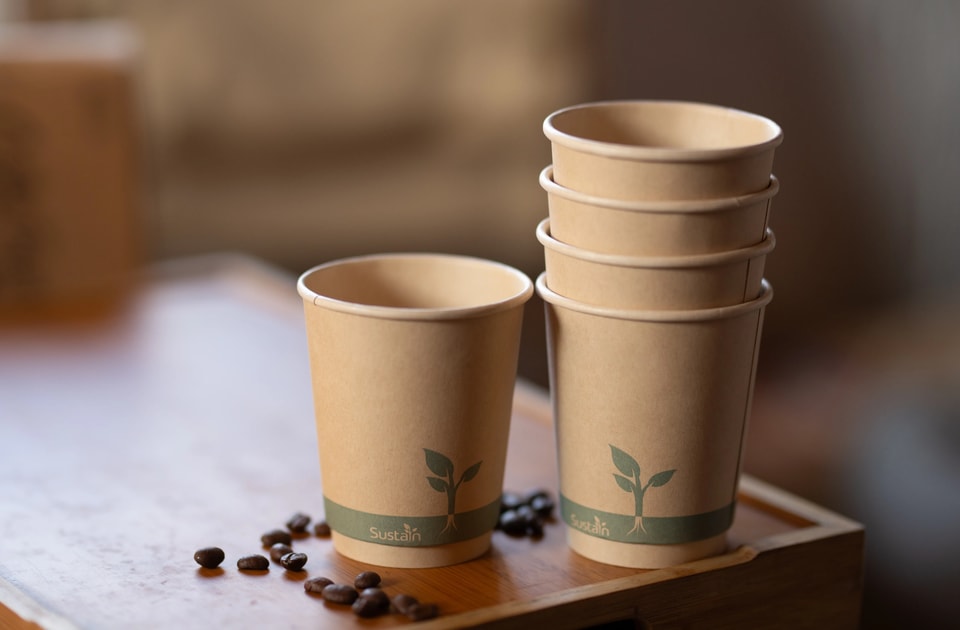
Disposable double wall coffee cups use a dual-layer paper structure: an inner cup body and an outer paper layer. This construction creates an insulating air gap that helps reduce heat transfer from hot beverages to the user’s hand, often eliminating the need for separate paper sleeves in takeaway and on-site service scenarios.
Suitable for takeaway coffee, tea, lattes and other hot beverages, double wall cups offer a smooth, premium exterior finish compared with many single wall alternatives. They can improve customer comfort while simplifying store service workflows. However, “double wall” is a structural description rather than a complete performance guarantee. Buyers should still validate paper thickness, coating type, capacity, heat resistance and lid compatibility for their actual operating conditions.
Single Wall vs Double Wall vs Ripple Wall Cups
The right cup structure depends on beverage temperature, service model, storage requirements and brand positioning.
| Cup Type | Best-Fit Scenario | Key Advantages | Main Considerations |
| Single Wall Cups | Lukewarm beverages and short in-store service cycles | Lightweight and budget-friendly | Usually require sleeves for hot drinks |
| Double Wall Cups | Mid- to high-end beverage brands and takeaway-focused operations | Integrated insulation, smooth printable surface and premium appearance | Confirm actual insulation performance, lid fit and paper specifications |
| Ripple Wall Cups | Niche hot-drink applications requiring added grip | Enhanced grip and heat insulation | Textured surface may limit precise printing and can affect storage efficiency |
Core Procurement Principle: There is no universal “best” cup structure. Select the option that best matches your beverage menu, cup sizes, service speed and customer-experience standards.
Step-by-Step Specification Formulation
A detailed, standardized RFQ is essential for accurate supplier quotations, reliable sampling and stable mass production. Vague requests such as “custom coffee cups” can lead to inconsistent specifications, production delays and finished goods that do not meet the intended market requirements.
1. Confirm Cup Capacity and Applications
Align cup SKUs with your beverage menu and service models:
- Define nominal capacity and standard filling level, such as 8oz, 12oz or 16oz.
- Clarify applicable beverages, including hot coffee, tea, lattes and seasonal drinks.
- Confirm service scenarios: dine-in, takeaway, delivery or mixed use.
- Lock compatible lid models and rim-size specifications.
- Define artwork requirements, including fixed logos, seasonal designs and multilingual text.
- Provide monthly or annual demand forecasts and reorder cycles for supply planning.
2. Define Actual Usage Conditions
Product performance should be assessed under real operating conditions. Key evaluation criteria include filling temperature, maximum holding time, delivery duration, in-store stacking and storage requirements, and fast lid installation during peak service periods.
Always test the complete packaging set—cup, lid, beverage and carrying accessories—rather than assessing the cup in isolation.
3. Build a Complete RFQ Document
A complete RFQ for disposable double wall coffee cups should include cup dimensions, order quantity, target market, structural requirements, coating preferences, artwork files, packaging standards, destination country, Incoterms and target delivery schedule.
It should also clearly state your requirements for pre-production samples, print proofs, food-contact compliance documents and applicable certifications. This helps avoid approval delays and misunderstandings before production begins.
Material and Coating Selection
Paperboard and barrier coatings affect food-contact suitability, liquid resistance, heat performance and sustainability messaging. Buyers should match the material solution to local regulations, end-of-life infrastructure and brand positioning.
PE Coating
PE coating is an established, cost-effective option for disposable paper cups. It provides dependable water and oil resistance and is often selected for large-scale, standardized procurement programs.
PLA Coating
PLA is a plant-based coating option commonly associated with industrial compostability. Buyers should verify the local composting infrastructure and applicable certification requirements before making compostability or environmental claims in a target market.
Aqueous Coating
Aqueous, or water-based, coatings can support plastic-reduction packaging strategies. However, buyers should request product-specific technical and compliance documentation rather than relying on broad environmental statements.
Key Tip: Avoid generic “eco-friendly” claims. Select coating materials according to local regulations, waste-processing conditions and your brand strategy, and support all sustainability statements with valid certification or technical documentation.
Brand Customization
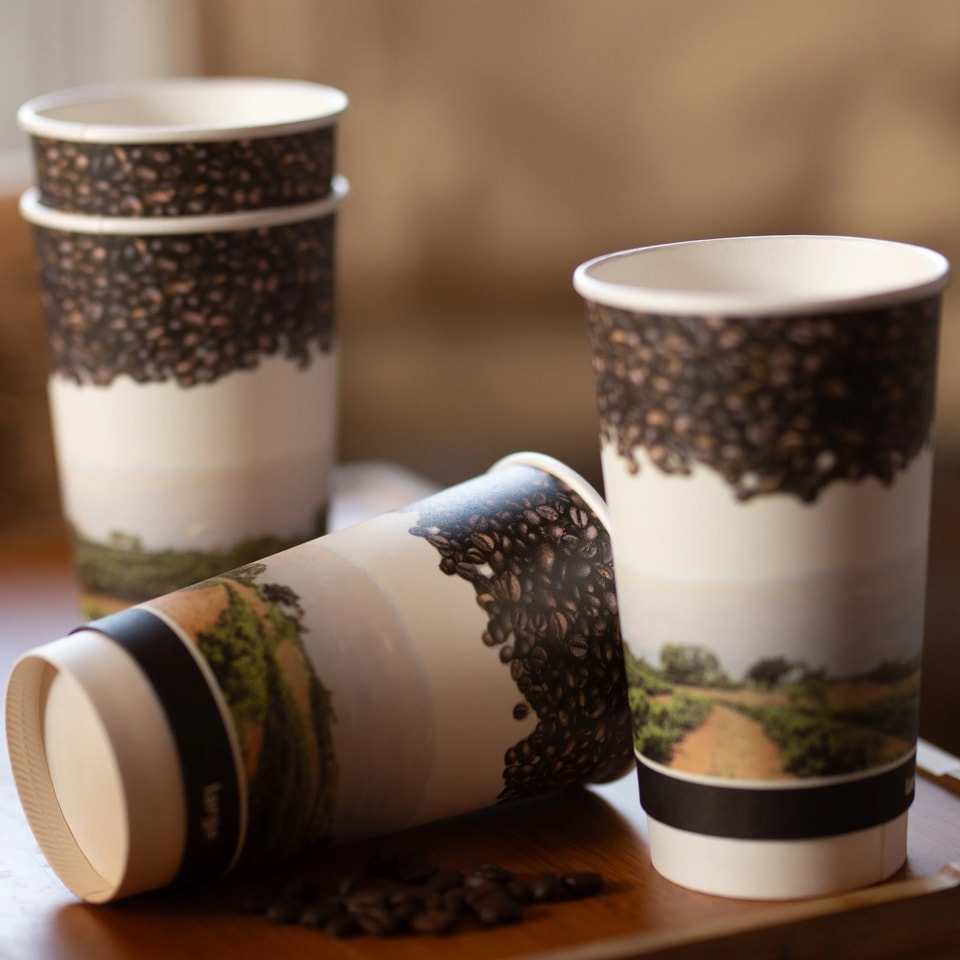
Custom disposable double wall coffee cups can function as mobile brand assets, appearing in customers’ hands, workplaces, delivery journeys and social-media content. Consistent print quality and standardized artwork management are essential for maintaining brand recognition across locations and reorder batches.
Artwork and Pre-Production Verification
- Use the supplier’s approved cup templates to account for print-safe areas and seam positions.
- Provide vector logos, approved color codes and verified copy to reduce color and text errors.
- Consider 3D forming distortion, as flat artwork may shift on curved cup surfaces.
- Confirm whether white or kraft paper is used, as the substrate can affect final color appearance.
- Require print proofs before approving mass production.
Sample Approval Before Mass Production
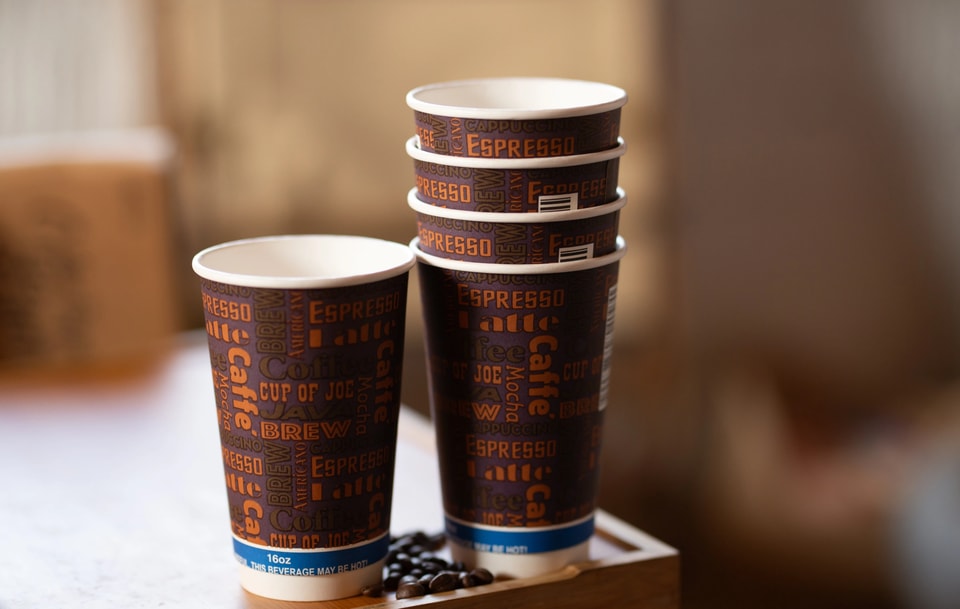
Samples connect the quotation stage with actual production. Before approving an order, evaluate cup texture, structural durability, print clarity, lid compatibility and stackability.
Procurement, quality-control, operations and marketing teams should approve the final sample together. The approved sample should then become the reference standard for repeat-order quality control.
Supplier Capability Verification
Product catalogs show available formats but do not, by themselves, demonstrate production stability, quality consistency or long-term service capability. B2B buyers should use structured due diligence when evaluating a supplier of disposable double wall coffee cups.
1. Evaluate Manufacturer Capability
Assess whether the manufacturer offers relevant paper-cup formats, including single wall, double wall, ripple wall and cold drink cups, as well as related foodservice packaging. Anbao’s paper cup series includes these cup formats and supports custom logo paper cup options.
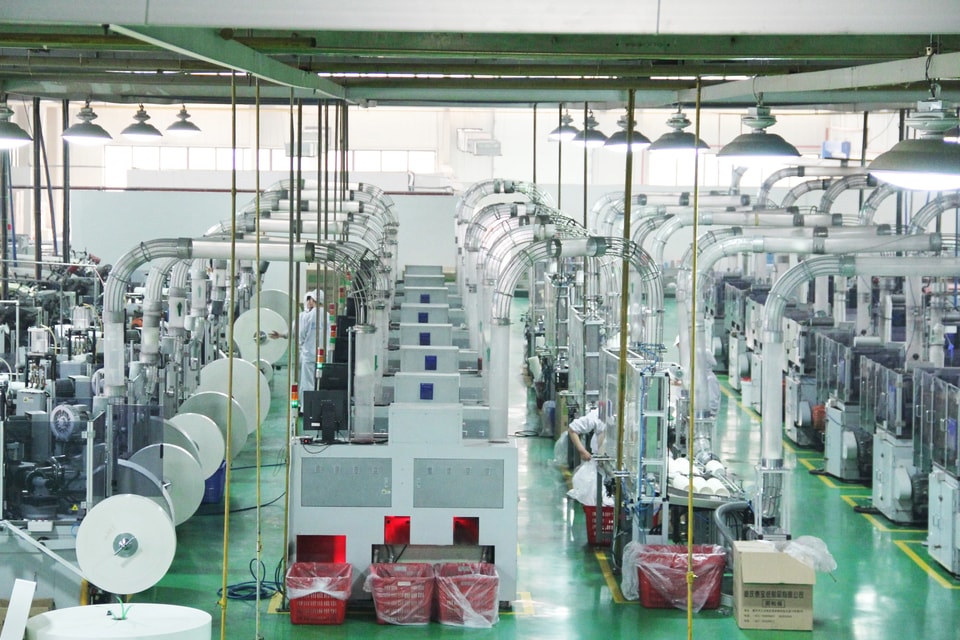
For cross-border sourcing, verify the manufacturer’s actual factory locations, export experience, customization workflow, sample procedures, quality-control records and communication process.
2. Request Applicable Compliance Documents
Ask for current, product-relevant documents rather than relying on general certification statements. The required document set will depend on the destination market, coating type and intended application.
- Quality-management and environmental-management certifications.
- Food-contact compliance declarations for the destination market.
- FSC or paper-source documentation where applicable.
- Product specifications for paperboard, inks and barrier coatings.
- Certificate scope, factory name, validity period and issuing body.
- Batch traceability and quality-inspection records.
3. Verify Quality-Control Processes
Ask suppliers how they control product quality from raw-material validation through sampling, production, inspection, packaging and export logistics. Key questions include how non-conforming products are handled, how artwork changes are controlled and how repeat-order consistency is monitored.
For a long-term program, buyers should also clarify minimum order quantities, customization limits, production capacity, packaging configuration, shipping terms and the process for handling quality claims.
Build a Unified Brand Packaging System
For multi-product foodservice and beverage brands, unified packaging procurement can simplify operations and strengthen brand identity. Pair custom double wall coffee cups with complementary formats such as paper bowls, square or rectangular food containers, popcorn buckets and ice cream cups to standardize visual identity, material specifications and supplier coordination.
A consolidated packaging program may help reduce supplier-management complexity while improving consistency across beverage, snack and takeaway meal packaging.
Questions to Confirm Before Ordering
- What are the full structural specifications of the quoted double wall cups?
- Which capacities, rim sizes and matching lids are available?
- Which coating type is included, and what documents support market eligibility?
- Which artwork templates, print-proofing procedures and approval steps are provided?
- Are physical pre-production samples available for final validation?
- Which quality-inspection standards and batch-consistency controls apply?
- Which certification files are valid and relevant to the target market?
- What are the MOQ, production lead time, packaging standards, shipping terms and expected delivery schedule?
- What procedures apply if quality issues arise after delivery?
A More Confident Next Step
Sourcing premium disposable double wall coffee cups is a structured B2B process that includes specification alignment, material selection, compliance verification, brand customization, sample validation and supplier due diligence. Strong procurement decisions prioritize product compatibility, repeat-order consistency and long-term supply reliability—not unit price alone.
As a global food packaging manufacturer, Anbao offers paper cups, paper bowls, food containers and compostable packaging for foodservice, beverage and takeaway applications. Buyers can work with its team to clarify product specifications, review customization options, request samples and evaluate documentation relevant to their destination market.
Solutions & Support
We go the extra mile to analyze your specific project in detail and offer a tailored business solution that meets your requirements.
Contact US
×Support order samples, customization, wholesale direct, and complete payment. If the product you look for does not have corresponding customized content, pls fill out the form below to contact us, and we will reply ASAP.
Go to Contact Form →