Biodegradable Take Out Containers: What to Verify Before Ordering
2026-10-17
Two takeaway containers can look almost identical in a supplier’s quotation: the same brown paper appearance, similar capacity and a description that includes “biodegradable.” Yet those details leave essential purchasing questions unanswered. What is the food-contact coating? Does the lid carry the same environmental claim? What evidence covers the finished product?
For restaurants, beverage chains and foodservice distributors, buying biodegradable take out containers requires more than choosing an environmental label. The decision must connect food safety, menu compatibility, documented claims and repeat-order requirements.
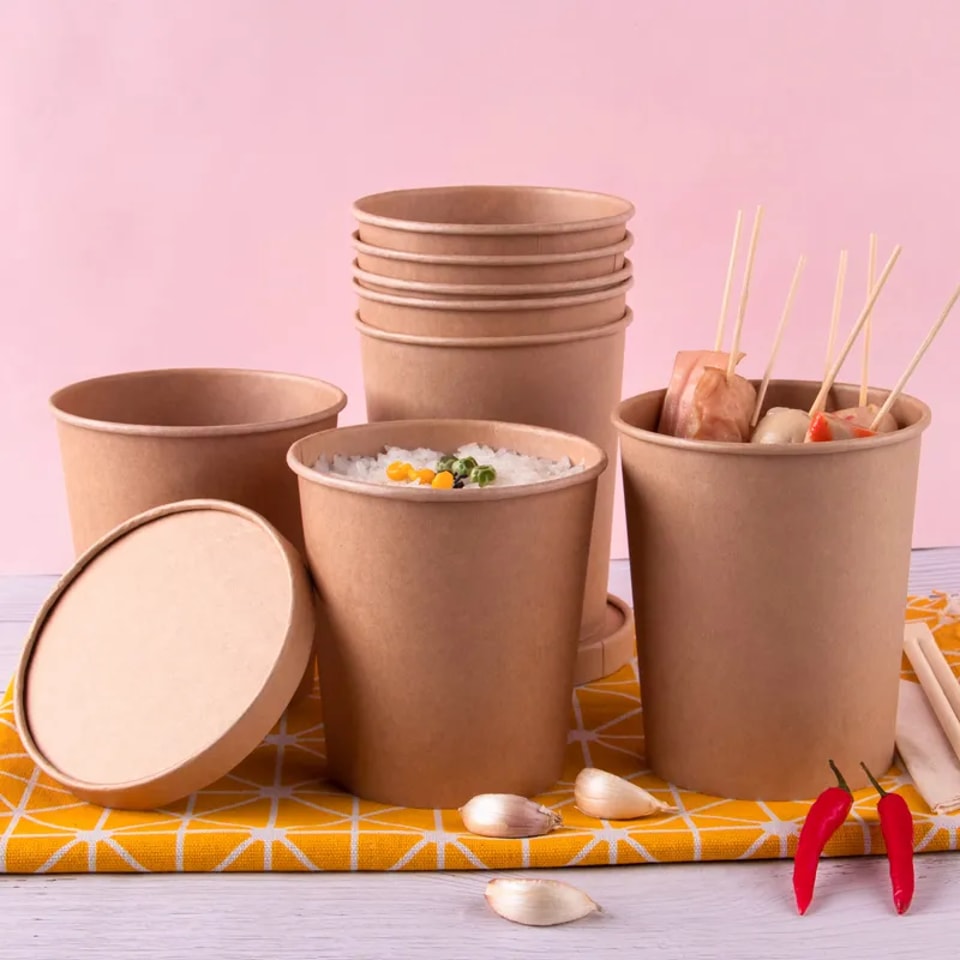
Anbao’s paper food containers provide a starting point for product discussions, with sampling and customization enquiries supported through its product information. The next step is to establish exactly which specification and supporting documents apply to your order.
Define the Foodservice Application Before Comparing Quotes
Specify the Food, Filling Conditions and Delivery Journey
Start your enquiry with the food and operating conditions, rather than a container photograph.
A useful purchasing brief should identify:
- Food type, including sauces, free oil and acidic ingredients.
- Filling temperature and expected food-contact time.
- Required portion size and usable capacity.
- Delivery handling, stacking and storage.
- Any intended freezing or reheating.
These details matter when reviewing food-contact suitability. The US FDA, for example, distinguishes food types and conditions of use, including hot filling, refrigeration, frozen storage and reheating. Documentation for one application should not automatically be treated as evidence for another.
Consider a hypothetical restaurant buying packaging for both chilled salads and hot, sauce-rich rice dishes. The same nominal capacity may suit both portions, but the purchasing team should still define and verify each use separately.
Turn Those Requirements into a Comparable Specification
Give every shortlisted supplier the same specification. Include the container dimensions, material requirements, lid, printing, order quantity, packing arrangement, destination and required delivery date.
Then clarify the quotation’s boundaries. Is the lid included? Does the price cover custom printing? Which freight terms apply? Are tooling or artwork charges separate?
Anbao’s quotation guidance requests product type, capacity, material or coating preference, quantity, artwork, destination country and delivery schedule. Preparing these details before enquiry creates a clearer basis for discussion than asking for a general “biodegradable container price.”
Check the Complete Container, Not Just the Paper
Identify the Paperboard, Barrier Coating and Lid Material
Ask for a component-level description of the proposed packaging:
| Component | Information to request |
| Paperboard | Grade, specified weight and relevant sourcing information |
| Food-contact barrier | Material identity and intended-use documentation |
| Lid | Material, compatible container reference and supporting documents |
| Printing and other components | Relevant information for the finished packaging and intended claims |
Anbao’s catalogue lists PE, PLA and aqueous coating options, particularly within its paper cup range. Its bowl and container range includes several structures and applications. Buyers should therefore confirm the coating available for the exact food-container model rather than transfer a cup specification to a bowl or meal box.
A coating name is not sufficient evidence of finished-product compostability. BPI distinguishes certified compostable products from broad material descriptions such as “bioplastic” and from unsupported biodegradable claims.
Review Seams, Rims and Container–Lid Fit
Request samples of the actual container-and-lid combination being quoted. During inspection, examine the rim, side seam, base and lid engagement, then repeat those checks after the intended food-contact trial.
For Anbao’s paper bowls and takeaway containers, the catalogue offers round, rectangular and square formats alongside soup and other food containers. Treat these as different selection options requiring their own specification review, not interchangeable shapes with assumed equivalent performance.
Record the approved lid reference alongside the container reference. This makes the purchasing requirement more precise than “matching lid included.”
Verify Environmental Claims and Food-Contact Documentation Separately
Ask What “Biodegradable” Means for the Exact Product
When a supplier uses an environmental claim, ask five questions:
- Which finished product or model does it cover?
- What standard or test supports it?
- Under which disposal conditions does it apply?
- Does the evidence include the lid and other components?
- Can the certificate or report be verified with its issuer?
“Biodegradable,” “industrially compostable” and “home compostable” should not be used interchangeably. In US guidance, the FTC requires scientific support for compostable claims and qualifications where products cannot be composted at home or suitable facilities are not widely available. It also cautions against unqualified biodegradable claims for products customarily destined for landfills, incinerators or recycling facilities.
For procurement, the practical distinction is between a general description and an evidenced claim tied to defined conditions. Industrial compostability evidence should not be presented as proof of home compostability.
Also check the intended waste collection route. A compostability claim needs to make sense for the market where the packaging will actually be used, not merely where it was manufactured.
Match Food-Contact Documents to the Intended Market and Use
Environmental evidence and food-contact evidence answer different questions. Keep them in separate sections of your supplier review.
For US applications, FDA guidance explains that the regulatory status of a food-contact material depends on its constituent substances, including their identity, specifications and limitations on use. A generic “food-grade” statement does not explain those details.
Ask the supplier to connect the proposed product to the relevant compliance basis and supporting reports. Check the material description, sample identification, intended food types and contact conditions. Where the product description differs from the quotation, request clarification before approval.
A kitchen trial can assess operational performance; it does not replace the documentation needed to establish regulatory suitability.
Read Factory and Sourcing Certificates Within Their Scope
Supplier certificates can support due diligence, but they should be read for what they actually cover.
ISO 9001 concerns quality management, while ISO 14001 concerns environmental management. Neither should be presented as a finished-container compostability certificate. FSC chain-of-custody certification addresses the tracking of qualifying forest-based materials through production and distribution.
If a supplier presents GMP or other manufacturing credentials, request the underlying scheme, issuing organization and scope rather than relying on the acronym.
Anbao’s website references BSCI, BRC, ISO and FSC credentials. However, the public text reviewed does not establish the current certificate scope and validity for every proposed product or manufacturing location. Obtain the applicable documents during supplier qualification rather than treating the website’s certificate list as order-specific approval.
Approve Samples Under Real Operating Conditions
Build a Trial Around the Actual Menu and Delivery Process
Use a written trial plan that mirrors the intended operation. For a delivery restaurant, this could include filling the container with the actual menu item, closing it using the normal workflow, placing it in the intended delivery bag and checking it after the expected journey.
Record the conditions rather than relying on memory:
- Food and portion weight.
- Filling temperature.
- Time before inspection.
- Stacking and handling arrangement.
- Leakage, deformation, lid retention and opening experience.
This is a suggested buyer trial, not a claimed Anbao test protocol. Set acceptance criteria around your operation and agree them with the supplier. Do not assume that one successful trial establishes suitability for every food, temperature or reheating method.
Record Acceptance Criteria and Keep an Approved Reference Sample
Translate the trial result into a purchasing record. Identify the approved container, lid, material specification, artwork version and packing configuration.
Where practical, retain reference samples with dated photographs and written observations. Define what counts as an unacceptable defect and how disputed results will be reviewed.
The objective is to make approval reproducible. “The sample looked good” gives production and quality teams less direction than a documented specification with clear acceptance criteria.
Verify How the Supplier Will Control Customization and Repeat Orders
Confirm Artwork, Production Checks and Change Control
For custom packaging, approval should cover more than logo placement. Ask how the supplier will control artwork versions, material substitutions, forming specifications, inspection records and packing instructions.
Anbao describes a digital-factory partnership with Siemens and reports automated paper-bowl production within its development history. These are relevant subjects for factory qualification, but they do not establish a particular order’s traceability or inspection arrangements without further evidence.
Useful follow-up questions include:
- How will the approved specification reach production?
- Which checks are recorded during forming and packing?
- How are production lots identified?
- What changes require the buyer’s written approval?
- How will a complaint be traced to the relevant batch?
These questions connect digital manufacturing claims to the controls your purchasing team actually needs.
Use Project Evidence to Assess Delivery and Reorder Fit
A relevant customer project provides context that a general capacity statement cannot.
Anbao’s published food packaging project experience identifies its paper-bowl relationship with Master Kong, including a core packaging-material supply period from 2004 to 2021. Its company history also records automated Master Kong bowl production in Southwest China and gradual implementation of a just-in-time system in 2016. These are company-reported examples of sustained supply and production development.
The appropriate procurement inference is limited: this experience provides a basis for asking about scheduling, replenishment and production controls. It does not prove that a proposed takeaway container is compostable, or guarantee the same arrangements for a new export customer.
For your order, separately confirm production lead time, shipping assumptions, forecast requirements, reorder quantities and responsibility for specification changes.
Before You Order: A Practical Buyer Verification Checklist
Separate Verified Information from Open Questions
Use a simple approval table rather than collecting documents without reviewing them.
| Verification area | Evidence to review | Status |
| Application | Agreed food types, filling conditions and handling requirements | Verified / Open / Not applicable |
| Materials | Identified container, barrier and lid specification | Verified / Open / Not applicable |
| Environmental claim | Product-linked evidence and disposal qualifications | Verified / Open / Not applicable |
| Food contact | Market- and use-relevant supporting documents | Verified / Open / Not applicable |
| Samples | Recorded trial results and acceptance criteria | Verified / Open / Not applicable |
| Bulk supply | Confirmed artwork, packing, delivery and change-control requirements | Verified / Open / Not applicable |
Assign an owner to each open item. Where evidence does not match the quoted product, seek clarification rather than filling the gap with assumptions.
Base Approval on Evidence, Not the Product Label
The strongest purchasing decision connects four things: the foodservice application, the exact packaging specification, the supporting documents and the agreed delivery requirements.
When discussing custom paper food packaging with Anbao, use that same structure to request product-specific information and samples. Its published manufacturing history and customer projects provide useful supplier context, while each proposed product still needs its own review.
That approach makes a biodegradable take out containers enquiry more useful to both sides: the buyer defines what must be demonstrated, and the supplier can respond to a specification rather than an ambiguous environmental label.
Solutions & Support
We go the extra mile to analyze your specific project in detail and offer a tailored business solution that meets your requirements.
Contact US
×Support order samples, customization, wholesale direct, and complete payment. If the product you look for does not have corresponding customized content, pls fill out the form below to contact us, and we will reply ASAP.
Go to Contact Form →